“There are three things I consider worth a lifetime of work. Robotics is one of them.”
That is the first sentence of the acknowledgments in my PhD dissertation. I changed majors in my first year of university, chose a doctorate at Shanghai Jiao Tong, passed my proposal earlier than anyone in our lab had before, and eventually took leave to start a company. My PhD gave me the chance to work on something I love.
Finding the robots I wanted to build
I grew up reading Asimov. The idea that I might one day write code for robots was irresistible. Within a month of starting university, I applied to transfer from chemical engineering to mechanical engineering.
What I had not anticipated was that Tsinghua’s mechanical engineering program was, as far as I could tell, a materials program in disguise. Much of my four years of specialist coursework concerned casting, forging, welding, and other material-forming processes. Only then did I appreciate the question a professor had asked during my transfer interview: “What will you do if what you study turns out to be different from what you imagined?”
People used to say you had three opportunities to change direction at Tsinghua: when you arrived, at the end of your first year, and when applying for postgraduate study. By June of my third year, I had made up my mind: I wanted to do a PhD in a robotics lab.
At the time, however, I struggled to find a lab at Tsinghua doing the kind of robotics I had in mind. I visited professors in mechanical engineering, precision instruments, automation, and computer science. What I found seemed to be underactuated mechanism design, PID tuning on microcontrollers, or experiments with Nao robots that struck me as rather toy-like.
The robotics I wanted to do seemed to be getting further away.
Then Professor D, who headed Tsinghua’s Institute of Forming Technology and Equipment, suggested that I visit Shanghai Jiao Tong University. I went south with handwritten recommendation letters from several professors. Seven years later, I can still remember the excitement of seeing a Yaskawa SmartPal for the first time: responding to a spoken instruction, it used vision to locate a drink on a table, picked it up, and handed it to a person.
“That is the kind of robot I want to work on!” I joined Professor C’s lab at Jiao Tong’s Robotics Institute.
From computer vision to motion planning
Two senior students working on vision were about to graduate, so my supervisor assigned me to computer vision and had me take over their work. I had entered the PhD program directly from my bachelor’s degree, which meant completing both master’s- and doctoral-level coursework. I scheduled all of it in my first year. Apart from the handover, that year was mostly classes and course projects.
The work I inherited used Bag-of-Features, or BoF, to classify household objects and provide information for robotic grasping. I knew essentially nothing about the subject. Over six months I read more than 300 BoF papers and ran various open-source implementations. I began to understand feature descriptors, classifiers, and neural networks. I also encountered Fei-Fei Li’s ImageNet early on; before the deep-learning work, much of her research had concerned BoF. I published my first international conference paper. I was getting the hang of academic research.
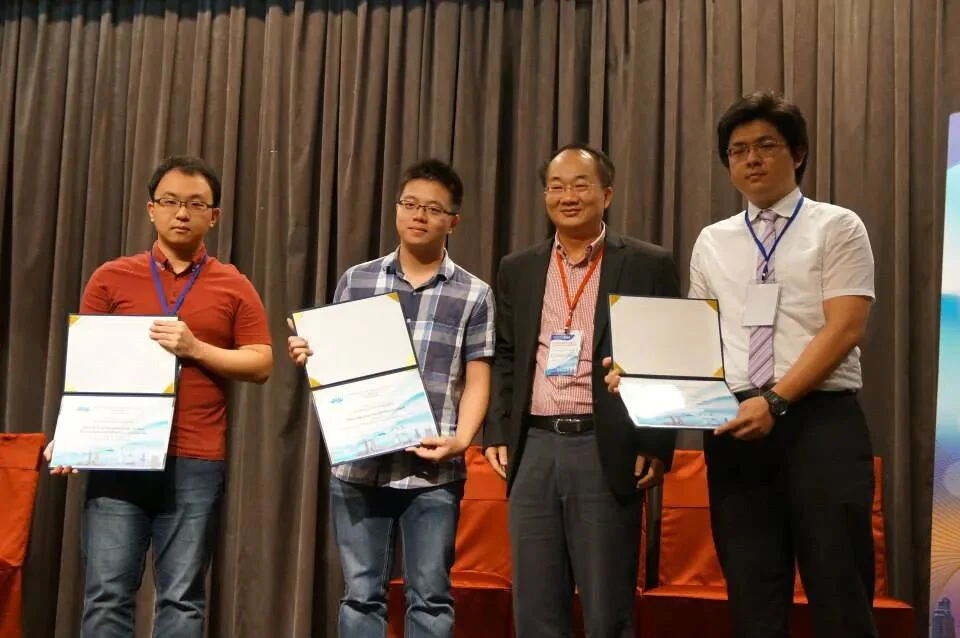
Our lab had a long-running collaboration with Yaskawa in Japan. Each year, Yaskawa proposed a theme, and the participating students—usually around ten of us—developed research plans around it. The BoF work was one part of that year’s project. Taking over from the graduating students brought me into the collaboration, and it was there that I found my own research direction.
Perhaps, after nearly a decade of development, Yaskawa had concluded that widespread adoption of service robots was still some way off. The company discontinued SmartPal. From my second PhD year, the collaboration shifted from service robotics to industrial robotics.
For reasons I still do not know, Masaru Adachi, the head of the technology development department responsible for the project at Yaskawa, asked whether I would like to switch to motion planning.
Industrial robots, he explained, were deployed by teaching them their motions. If the motion-planning methods used in service robots could be made reliable and efficient enough for industrial use, that could be a promising direction.
I had wanted to work on robots rather than vision alone. Motion planning also looked fascinating: it might change how people used industrial robots. So I changed direction.
As I had with BoF, I eagerly jumped straight into the research papers.
This time I hit a wall.
Robotics spans several disciplines. You cannot simply skip the foundations and begin with motion planning. I had taken a few automatic-control courses, but our robotics courses at Jiao Tong had only covered DH modeling and basic dynamics. Graph search, optimal control, projections between spaces—all these things in the papers became obstacles.
Fortunately, NetEase Open Courses, Coursera, edX, and university course websites gave me access to excellent lectures and textbooks. They helped me fill in the mathematics, programming, and robotics I was missing. I also discovered ROS, which let me put algorithms onto real robots much more quickly. I described some of these resources in my earlier self-study guide to robotics.
By the end of my second year, I had published a paper in an SCI-indexed journal and passed my dissertation proposal—the earliest any doctoral student in our lab had done so. My plan was straightforward: work quickly, publish another SCI paper, and graduate early.
Learning by building the rest of the robot
That summer, I attended an international standards meeting on modular service robots on my supervisor’s behalf. While in Beijing, I visited Professor H, who had been my undergraduate class adviser at Tsinghua. He told me that the most important things to acquire during a PhD were research methods and knowledge of the field. The degree came second.
Back in Shanghai, I thought about that conversation. I did not really understand all the parts of a robot. How did a planned motion become actual movement? What role did dynamics play in control? How did force control work? How was visual servoing implemented? Beyond motion-planning algorithms, I had never programmed those things on a real robot.
Suddenly, graduating as quickly as possible no longer felt urgent. During my third year, alongside the Yaskawa motion-planning project, I asked my supervisor for other projects that interested me. I worked with different robots and different parts of the system. I also began sharing some of the work on WeChat and Zhihu:
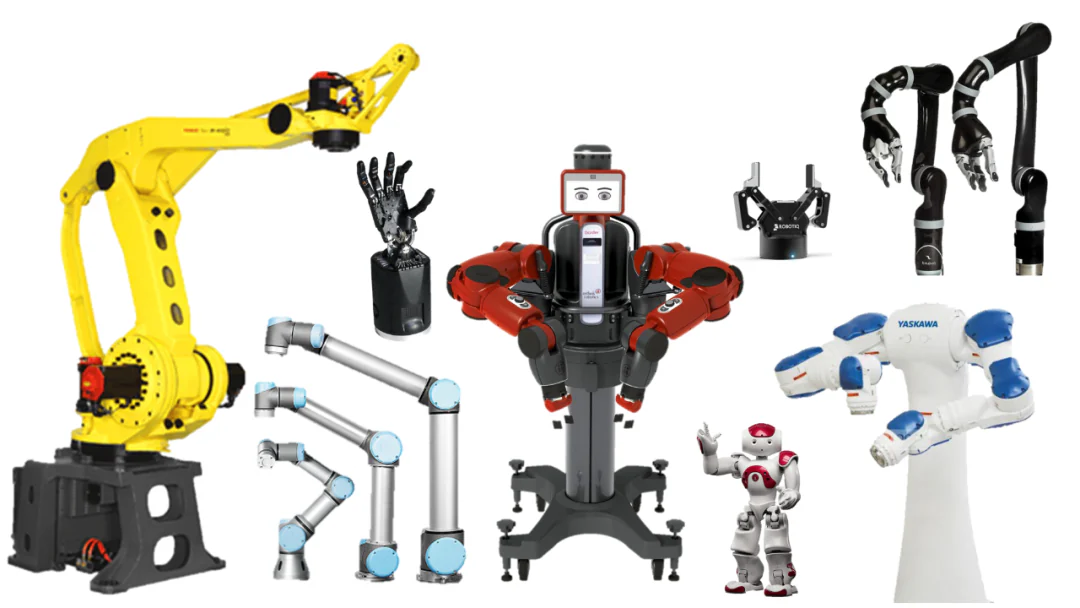
- Using a UR5 for farming and to play the mobile game Jump Jump.
- Developing teleoperated screw-fastening for a nuclear-fusion vacuum vessel.
- Using Baxter for grinding.
- Building MarketBot, a mobile shopping cart that followed its user and calculated the cost of their shopping.
- Teaching Nao to recognize medicines.
- Using spoken commands to have a Kinova robot pick up food.
- Playing rock-paper-scissors with a Shadow Hand.
- Making coffee with an SDA5 dual-arm robot.
- Implementing autonomous navigation for a mobile robot.
- Developing a palletizing-robot controller with EtherCAT and experimenting with collaborative-robot functions, first on one-seventh of a robot, then on the remaining six-sevenths.
Trying deep reinforcement learning
By my fourth year, I had used many kinds of robots, worked on different parts of robotics, implemented a range of motion-planning algorithms, and spoken with many leading researchers. But one question kept bothering me.
When we move our arms, it does not seem to work like this. We do not sample randomly or get stuck in local minima. Surely motion planning should work differently.
Then AlphaGo appeared, beating Lee Sedol 4–1.
I read the DeepMind paper over and over. This was cool. Like robot motion planning, Go could be formulated as a Markov decision process, or MDP. In both cases, the enormous state space made conventional reinforcement learning impractical.
Could deep reinforcement learning work for robot motion planning?
I began studying deep learning and reinforcement learning. As I read about reinforcement learning, I kept thinking: this is how people learn. There must be something to it.
At almost the same time, Sergey at UC Berkeley published work on end-to-end robot control with deep reinforcement learning. That reinforced my conviction.
My contribution to that year’s Yaskawa project became deep reinforcement learning for robot-arm motion planning.
After a year of experiments and some email exchanges with David Silver, I had a better sense of its limits. Reinforcement learning still felt like the right idea, but deep networks did not seem able to represent the policy well enough. The robots learned relatively simple policies, and in our real-world settings the generalization of DRL was much worse than that of traditional motion-planning algorithms.
I still thought it was an interesting direction for academic research, even though we did not yet have a sufficiently elegant reinforcement-learning algorithm. I also saw Monte Carlo and dynamic programming in reinforcement learning as another way of describing ideas behind RRT* and A* in motion planning.
Taking research into industry
Having tried it, I could put that question to rest for the time being. In my fifth year, I began bringing together the previous four years of work for my dissertation and thinking about what to do after graduation.
Years of discussion with Yaskawa, together with what I had seen in factories as an undergraduate, had shown me how limited industrial-robot adoption still was. Outside highly standardized industries such as automotive manufacturing, many businesses could not use robots effectively. Robots performed fixed motions; deploying them was difficult in industries where products changed frequently. Much of manufacturing therefore remained labor-intensive, with people spending their days on repetitive, tedious, sometimes hazardous production lines.
Motion planning was one of the technologies that could help change this. I wanted to put my research to work on real industrial robots.
Robotics was attracting a great deal of interest in 2017. Startups were appearing everywhere, and established companies were entering the field. I began looking for internships and talking more widely with industry. I had substantial conversations with the founders of what felt like almost every robotics-and-vision startup, both in China and overseas. I received a number of offers, including one from Yaskawa in Japan.
But what other people wanted to build never seemed quite the same as what I wanted to build.
Then Li Hui, who had been quietly sitting in my WeChat contacts all this time, asked: “Have you thought about starting something yourself?”
“Let’s do it.”
Sometimes you just go with your gut. Apart from technical discussions, the two of us had not talked all that much. I simply felt that between us we could do 3D vision and motion planning well—and that integrating the two was the way to build what I had in mind.
Li Hui flew from Austria and I flew from Shanghai to meet in Beijing. Without a business plan, and before we had even explained exactly what we intended to build, we agreed on angel investment with Yue Bin at Gaorong Capital.
That night, in a 24-hour fast-food restaurant near our hotel, we discussed what we wanted to do and the technical approach in more detail. Then we went back to Austria and Shanghai. In April 2018, Li Hui registered Shenzhen RVBUST Technology Co., Ltd. in Shenzhen. I stayed in Shanghai to finish my studies and helped prepare the company remotely.
Taking leave to start a company
Things at university were not going quite as smoothly. I had published three SCI-indexed papers and met the university’s graduation requirements. But my supervisor felt that my research was too theoretical. In a practical discipline such as mechatronics, he argued, grounding it in a real project would make the dissertation easier to defend. Several rehearsals within the group ended with the same objection.
On May 24, 2018, I decided to take leave from the PhD.
I wrote this in a note on my phone:
I had everything required for graduation ready in March, yet for reasons I cannot make sense of I still have not had my preliminary defense. I feel that I have learned nothing new this semester, and that is making me deeply frustrated. When I think about it, obtaining a PhD does not seem all that important in the context of my life. Life is short. Now that I have found something more meaningful to do, this period feels like time I am wasting.
I knocked on my supervisor’s door and told him I wanted to take leave. We talked for more than an hour. Then I went south to Shenzhen and began working on the company full-time.
Li Hui and I had both spent years in technical research and development. We knew what we wanted to build and what had to come first. We did not think we could rely directly on the available open-source robotics software platforms, so we would have to write our own. We could not find a 3D camera with the accuracy and price-performance balance we would need, so we would have to develop the hardware too.
Neither was a small job. We needed a long stretch of quiet engineering to build those foundations ourselves. That shaped the company’s low-profile, practical approach during its first two years.
I am grateful for that time. Line by line, I turned the theory from my PhD into code running on real robots. Together we built a strong engineering team, and the company released three products we were pleased with.

Coming back to defend
At the beginning of 2020, the graduate office told me that I was approaching the maximum enrollment period and could not extend my leave any further. By then, my research had been validated on real robots, and my supervisor also wanted me to finish the defense.
In June 2020, with the pandemic keeping us apart, I defended my dissertation online.
Apart from being able to accept “Dr. Qiu” without qualification, having the degree did not seem to change very much. Industrial robots were still too difficult to use. Most manufacturing still depended on human labor. We still needed more capable people working together on machine vision and motion planning.