Robotics doesn’t need its own foundation model
Where general models, physical skills, self-models, and continued learning belong in a robot.

Where general models, physical skills, self-models, and continued learning belong in a robot.
Examining VLAs, world models, and reinforcement learning through observability, stability, and control bandwidth.
Two routes toward general-purpose robots: start with general intelligence, or make a particular body more capable.
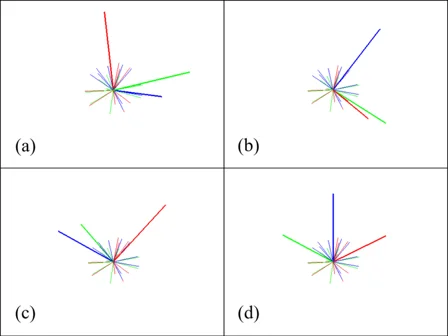
Comparing Euler angles, quaternions, and tangent-space averages with numerical optimization.
From changing majors to motion-planning research and starting a company: how a PhD changed the way I worked on robots.
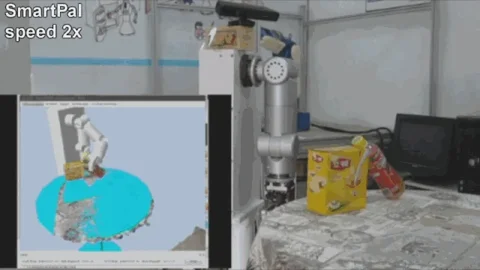
Using Bézier blends on Lie groups to connect orientations without abrupt changes in angular velocity.
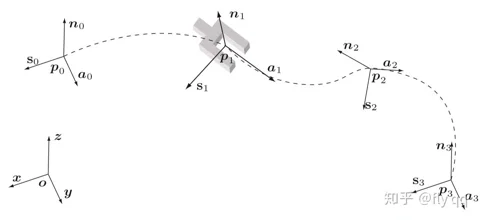
Modeling acceleration and orientation together to keep a drink from spilling during fast motion.
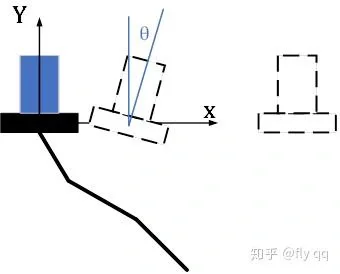
From joint tracking to pose error: why the geometry of rotations matters in visual servoing.
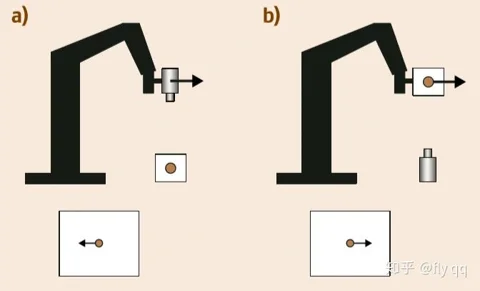
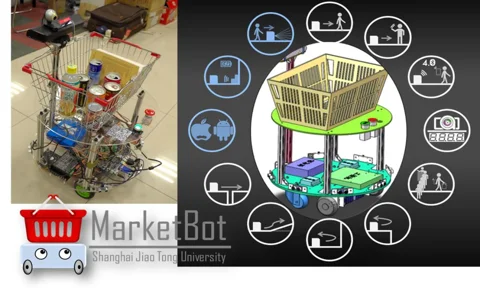
A one-month prototype combining person tracking, gestures, obstacle avoidance, and barcode pricing.
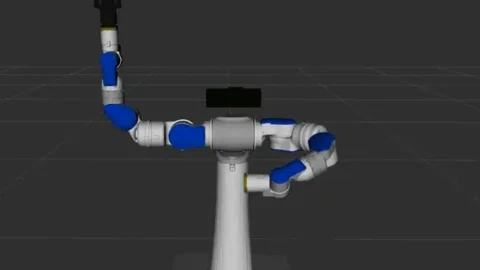
Using a redundant joint to avoid obstacles and joint limits while preserving the end-effector path.
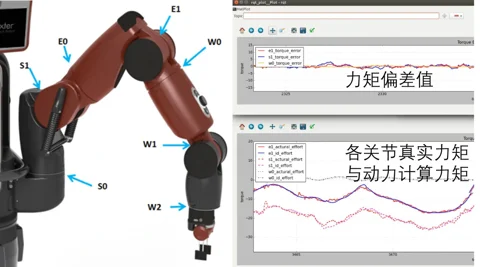
Using a dynamics model on Baxter for collision detection and hand guiding.
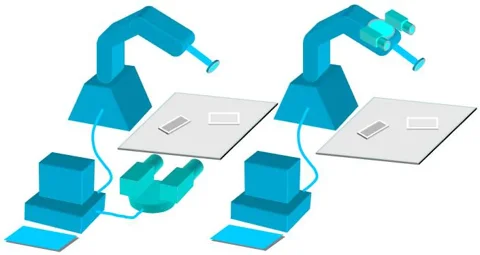
Eye-to-hand and eye-in-hand calibration, and the coordinate transformations behind AX = XB.
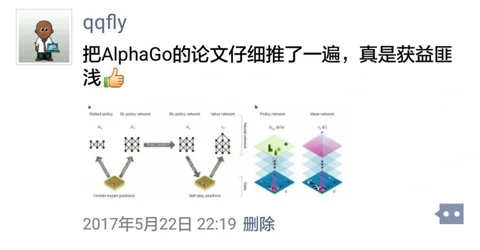
The networks and search behind AlphaGo, followed by my guesses about its play during the May 2017 matches.
A single-joint test rig for collision detection, gravity compensation, and hand guiding.
From finding a route in a game to planning a robot arm’s motion: classical methods, configuration space, and the difficulty of higher dimensions.